
Call for Artists: Functional Art at Sandy Spring Museum
Statement of Purpose
Sandy Spring Museum is creating a growing collection of permanent functional artworks that will shape the visitor experience across our campus for years to come. Selected works will become part of a long-term cultural landscape initiative that combines public art, environmental stewardship, and regional storytelling. We are seeking artists who are excited to create highly visible functional artworks that invite interaction while celebrating the people and traditions of Montgomery County.
As part of its Master Plan, Sandy Spring Museum is transforming its grounds into a campus where visitors discover cultural heritage, nature, and community through a network of walking trails and gathering spaces. We are seeking proposals from artists interested in creating functional artworks inspired by the stories, traditions, landscapes, agricultural history, immigrant communities, and living cultural heritage of the Sandy Spring region and Montgomery County.
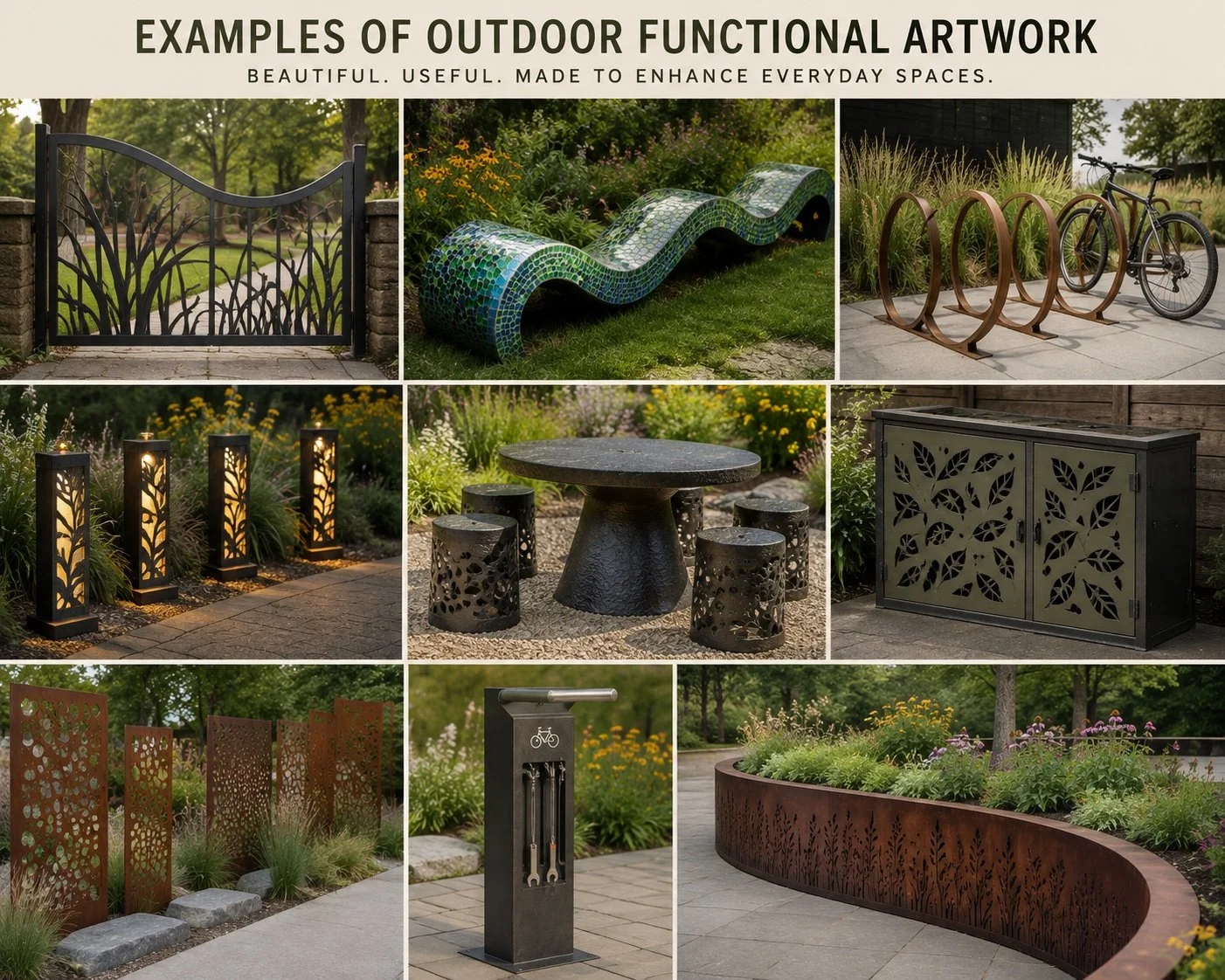
Functional art may include seating, gathering spaces, bike racks, interpretive elements, trail features, landscape structures, or other artworks that combine artistic expression with everyday use. We are particularly interested in works that visitors will encounter while walking on the new trails (see site map).
Current plans are to install at least one work each year for the next several years. This is Phase I of a two-phase application process. Artists selected for Phase II will receive a $1,000 honorarium to develop a site-specific proposal. See “What Steps Are Involved? Phase II” for details.
The selected functional art concept(s) should respond to a connection to place, community or history. Artists selected for Phase II will have access to the Museum's archives, staff expertise, and historical resources to help inform their designs.
➢ Submit a Phase I application by September 18, 2026
If you have questions about this Call for Artists, please contact Programs & Exhibits Coordinator Yu Jie by email or phone (301) 774-0022.
Who Can Participate?
Because we celebrate local talent, artists residing in Maryland, Virginia, or the District of Columbia (DMV) are eligible to participate. Anyone living within the DMV can apply, including emerging and established artists, as individuals or as a group.
Artist and Project Selection
Selection of artists for Phase II will be based on experience with similar projects and artistic qualifications that demonstrate an ability to successfully complete the project. We encourage applications from underrepresented artists.
The final artwork must be designed for permanent outdoor installation with minimal ongoing maintenance. It must be safe for public use and fully functional for its intended purpose.
Phase I does not require a developed design, drawings, renderings, fabrication plans, or a project budget. We are interested in learning about your artistic practice, relevant experience, connection to the region, and preliminary thinking about functional art for the Museum campus.
Applications will be reviewed by the Museum’s Master Plan Committee. Decisions of the committee are final.
Selection will be based on the following:
Artistic excellence
Experience completing public art projects
Ability to create durable outdoor work
Interest in local history and culture
Approach to community engagement
Feasibility
What Steps Are Involved?
Phase I Submissions
Applicants need to complete and submit a complete application to be considered. Submit your Phase I application by September 18, 2026, through the online application form. We plan to select several proposals each year but are under no obligation to do so.
A complete application will include the
- artist’s resume and artist statement
- portfolio of relevant works (5–10 images), preferably with a link to a digital portfolio
- your personal connection to Sandy Spring or the region
- a description of how you typically engage communities when developing site-specific work
- your preliminary idea (up to 250 words).The Museum’s Master Plan Committee members will review the applications and select artists to participate in Phase II. Selected artists will be contacted by the committee.
Timeline
August 5, 2026: Call for Artists issued
September 18, 2026: Phase I applications due
November 2, 2026: All artists will receive notification of results.
Winter 2027: Phase II is anticipated to begin.
Phase II
Artists selected through Phase I will be invited to develop a site-specific proposal and will receive a $1,000 honorarium for completing this phase. Phase II proposals will be due approximately six weeks after invitation.
Phase II submissions will include:
a developed concept with drawings, sketches, renderings, or other visuals sufficient to communicate the proposed artwork;
proposed location, dimensions, materials, function, and approach to fabrication and installation;
a description of the work’s connection to place, community, or history;
proposed approach to community engagement, if applicable;
a project timeline; and
a detailed project budget, including artist fee, research/community engagement, materials, fabrication, transportation, site preparation, and installation.
The Museum anticipates total project budgets of $15,000–$25,000, although larger budgets may be considered for exceptional proposals.
Final Selection and Fabrication
Following review of the Phase II proposals, the Museum may select one or more projects for fabrication and installation. The number of projects selected and the timing of their fabrication will depend on available funding and other considerations. Some projects may be commissioned in a future year.
Artists whose proposals are selected will enter into a contract with the Museum to fabricate, deliver, and install their completed works. Selected artists will create, deliver, and install their completed works on Museum property within six months of being awarded a contract. The works will become the property of the Museum.
The Museum plans to commission multiple works over the next several years.
